In the span of one week, I saw two malnourished babies who exemplified the horrible results of untreated mastitis in rural Malawi. This is a condition that can easily be treated, but due to cultural mores and lack of education, the women did not access care immediately. These women will probably lose their breasts, and their babies have lost important early nutrition. Continue reading “An Ounce of Prevention”
While walking home one day, I noticed the girls on the farm collecting large stalks of grass. I asked them what they were doing. According to them, the headmaster of their school required the students to bring bundles of grass so they could build another latrine (the grass is used to make the walls). I thought to myself, “How wonderful, they are doing this on their own.” So many times in Malawi things are not done because “the projects need donors to provide money” so that Western-type building materials can be used. However, this schoolmaster took the initiative to use home-grown materials to build the latrine. We hope to do the same thing in Kindle–to use the resources the people have to achieve the things that will benefit themselves and their communities.
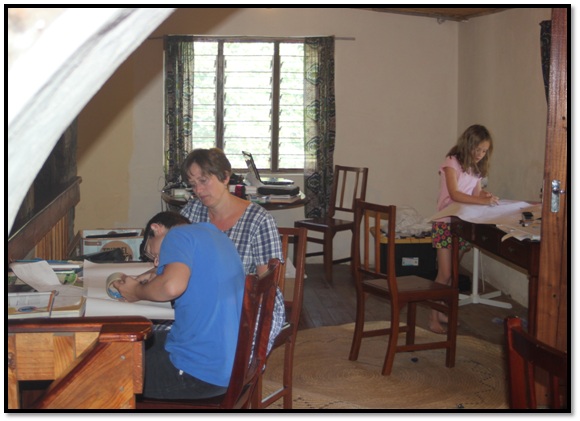
I am a city girl. I like to have things neat and clean. I hate bugs, mice, and crawling things. I have learned to hike and camp only because Dean likes to do these things. Continue reading “A City Girl”
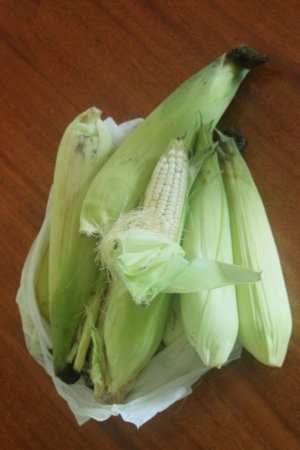
Last week at Partners in Hope I received word that a woman wanted to meet with me for “personal reasons.” As I was walking to meet with her, I was thinking about what problems she might have or what I might have missed. But her purpose was simple: she just came to give me a bag of dowe (fresh maize) to say “thank you” for the program to prevent cervical cancer. She had been tested about a month before, had received a good report and was so relieved! I was humbled by her making a special trip to show her appreciation.
A woman came to the clinic for cervical cancer screening, but when we did the screening we found that she didn’t have a cervix, or a uterus. She was visibly surprised at the news we gave her. She said that she had given birth by Caesarean five years ago and hadn’t had a period since. She knew that something must be wrong. Either the doctors didn’t tell her that they had given her a hysterectomy or else she didn’t understand it when they did. Since that day we’ve had at least two other women with this same story.
Last week, after having many weeks of administrative work for the VIA (cervical cancer prevention through Visual Inspection with Acetic Acid) program, I was feeling discouraged about my role. It seemed like it was difficult to get many women to come to the VIA clinic and there were many barriers to integrating this program into the HIV clinic as part of their standard care. But then two women came in and reminded me of the need for this program. Continue reading “Positive Feedback”
Cervical cancer is the number one cause of cancer deaths in Malawi; not breast cancer, not lung cancer, not colon cancer, but cervical cancer which can be prevented by early detection and treatment of precancerous lesions on the cervix. Cervical cancer cases are much lower in developed countries due to screening, specifically with the Pap smear. However, Pap smears are not affordable and are not feasible in Malawi: there is only one pathologist to read them in the country and he is based in Blantyre. Visual Inspection of the Cervix with Acetic Acid (VIA) was developed previously by international healthcare providers as an inexpensive, effective way to detect precancerous changes in the cervix. If changes are detected, there are treatments available to remove the lesion to prevent it from developing into cancer. The Ministry of Health in Malawi is pushing for more VIA testing throughout the country.
Continue reading “Cervical Cancer Prevention”
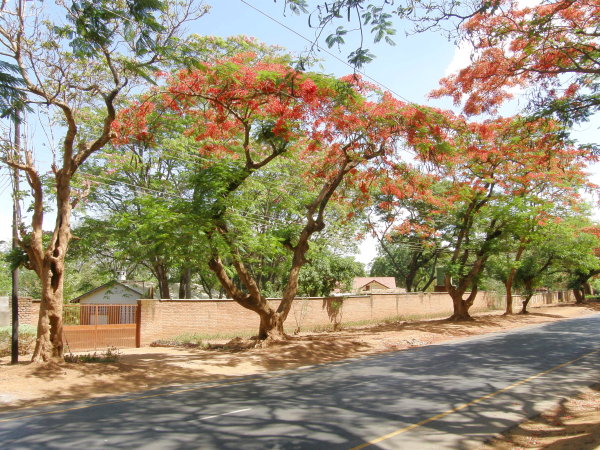
Clang, clang..there was another person at the gate. This sound was becoming a usual occurrence; since arriving almost two months ago we have had many people coming to our gate: some looking for work, others wanting to sell vegetables or woodcarvings. That time, though, I was just tired and alone and did not want to go out to tell someone seeking a job that we had no work available at this time. I asked our guard what the person wanted and he stated he did not know because the man was Shona and did not speak Chichewa well. When I heard Shona, my ears perked up. As Peace Corps Volunteers, Dean and I had lived in Zimbabwe among Shona people and had learned Chishona, their language. I had to know his story.
Continue reading “The Poor at Our Gate”
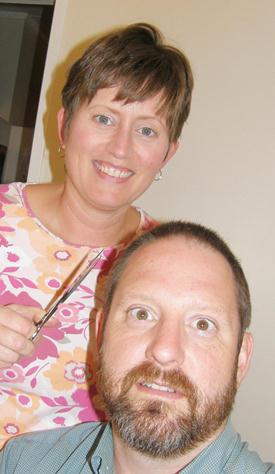
We laughed very hard at a mistake Dean made yesterday in our language lesson; I still get the giggles when I think of it. He was trying to tell our teacher that I cut his hair this past weekend. Since many of the words are similar between Chishona (which we learned in Zimbabwe) and Chichewa (the official language of Malawi), he decided to use the Chishona word for hair. Our teacher had a funny look on her face and said “Why is he telling me this?” After he explained in English what he was trying to say in Chichewa, she patiently taught us the three words Chichewa has for hair: tsitsi (hair on your head), cheya (hair on your arms and legs), and bvuzi (pubic hair, the word that Dean used). That explained her reaction! We had a good laugh and learned a valuable lesson about hair in Chichewa.




 The Stockers' Stories