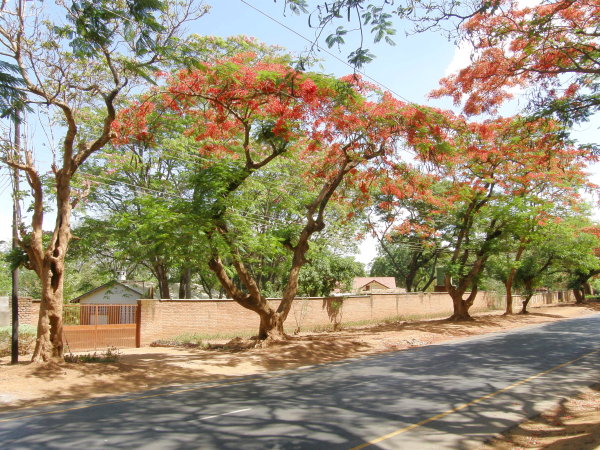
Clang, clang..there was another person at the gate. This sound was becoming a usual occurrence; since arriving almost two months ago we have had many people coming to our gate: some looking for work, others wanting to sell vegetables or woodcarvings. That time, though, I was just tired and alone and did not want to go out to tell someone seeking a job that we had no work available at this time. I asked our guard what the person wanted and he stated he did not know because the man was Shona and did not speak Chichewa well. When I heard Shona, my ears perked up. As Peace Corps Volunteers, Dean and I had lived in Zimbabwe among Shona people and had learned Chishona, their language. I had to know his story.
With a teary, raspy voice he started in English, “My name is Tendai. I am from Zimbabwe, but I have been deported from South Africa and sent here to Lilongwe. I have no money. I have just been treated for malaria and asthma at the hospital here. Today, I came to get help from my sister, who used to live across the street, but she is gone and the people who now stay there could only give me this water. I need to get to Mzuzu where I can live at my mother’s house. I can take a minibus, but that will cost 1000 Kwacha. Can you please help me?”
This was not what I had expected. Here was a confusing story from a man I had never met and he was asking for money. One of the challenges we face while living here is dealing appropriately with beggars, wait… sorry, I should say people begging on the street, because first and foremost they are people. In Boston and in Madison, I would never give money to people on the street. Instead, I would buy them something nutritious to eat (yes, I know, that was very paternalistic and judgmental: thinking I knew what was best for them).
But here, the problem is magnified. When we are on the streets in the city, it is common to have 4-5 different people approaching us with open hands looking for money. In their eyes we have so much and, of course, we can give them something. Our minds’ defenses start building walls to prevent us from having to deal with people always asking for money. We have been told by one expatriate that we just need to learn one word, “Pepani,” which means “Sorry” in Chichewa. Yet I do not want to develop a hard heart and miss out on doing what is right.
Dean and I have been talking about how we want to interact with the people who are begging. We cannot give everyone money and we do not want to foster dependence. However, we also want to be generous with everything we have. We have talked about giving to programs that focus on the root causes for the poverty here. Most of the people begging are older women, young women with children, and disabled people. There only a few programs here to help these groups of people to learn skills which they could use to support themselves. It would be great to support these programs (when we find them since we are still so new) and possibly start more. But, on that day, we had not come to a decision yet, Dean was gone, and here was a man at the gate with a sad story and I needed to make a decision.
SO… I stalled. First, skeptic that I am, I greeted him in Chishona to see if his story fit. He answered in perfect Chishona and continued on. Then I asked him to explain more about the situation because I did not understand how all of this could have happened.
Finally I asked him to wait. On the one hand, his story seemed to be true: I asked our guard what he thought, since I was still new to the Malawian culture, and he agreed that the story seemed to be true. However, I did not want the dubious distinction of being known throughout Lilongwe as easy targets for a sad story.
After considering for a while, I felt like I needed to give him the money. He was a stranger and had been sick. He just wanted to get home, but could not get there without my help. I had the money, though we do not have an excess to be handing out to everyone who comes to the gate. For this one instance, I felt like I should help directly with finances, so I gave him the money.
Since then, we have had others come to the gate looking for money .We have tried to help in some way, but have not felt it necessary to provide money again. However, we still need to work out how best to deal with the people around us who need so much: food, water, medicine, skills-training, wheelchairs, …





Leave a Reply