
Yesterday’s funeral was quite an affair! Even our local Member of Parliament came to pay respects to the chief. There were hundreds of people in attendance. There is so much that I could say about it that I’m not sure where to start.
The chief died three days ago, and preparations for the funeral took two days. The grave was dug in the village, not in the graveyard, which I’m told is because people are hoping to be able to call upon his spirit to help them in the village. The digging was finished mid-morning on the day of the funeral, and most people began to arrive around noon. Absolutely everybody comes, partly to pay respects to the dead, and partly to show that they are not afraid to come. Often it is believed that the person died as a result of ufiti (witchcraft), and by coming to the funeral you are demonstrating that you are not the person who used ufiti to curse the person. Whoever had laid the curse on them would be too afraid to come to the funeral.

Also around noon, the Gule Wamkulu began. Literally, “Gule Wamkulu” means “big dance,” but it really refers to the dancers, the associated Nyau secret society, and their beliefs, as much as it refers to the dances themselves. We have read much and learned much at the KuNgoni Cultural Centre about Gule Wamkulu, but it was honestly difficult to reconcile what we have learned with what we saw yesterday.
We had learned that the Gule Wamkulu dancers are present at funerals to lend solemnity and respect for the spirit world, but from what we saw they functioned more like clowns. Almost all of them just ran around doing things to make people laugh. Sometimes people were freely handing them money, even stuffing it into their pockets. And other times they would harass people until they received money. I asked whether they were collecting money to help the family with funeral expenses, but no, the money is kept by the individual dancers.
One of the favorite crowd-pleasers was Njinga ya Moto, “motorcycle.” I didn’t get a photo of this dancer. In fact, taking photos of anything related to Gule Wamkulu is forbidden, but I had managed to receive special permission from the chiefs to take a few photos, as long as I agreed to give them about $10.
If you believe the description at KuNgoni Cultural Centre, Njinga ya Moto teaches people not to be rude, by demonstrating how people on motorcycles pass too close to people at very high speeds. And indeed this is what Njinga ya Moto does, chasing women and children all over the place. When this or any other dancer comes charging at the women, they run away screaming in fright, but they are usually laughing when they return.
The short video clip above shows one of the Gule dancers with an elaborate traditional mask. I didn’t recognize the mask, and nobody could tell me the name or what he represents.

There was one dancer, a man on stilts, who did not get all of these laughs. If I have identified the mask correctly, he was Mfiti Ilauala, “The Witch who has come out in the open.” At this point, some background may be helpful. There are two different Chichewa words that are often translated “witch doctor.” Mfiti is one, and sing’anga is the other. Mfiti is considered by all to be a bad witch doctor, who specializes in curses and all kinds of evil. Sing’anga is considered by many to be a good witch doctor, one who you would call upon to counteract a curse made by an mfiti.
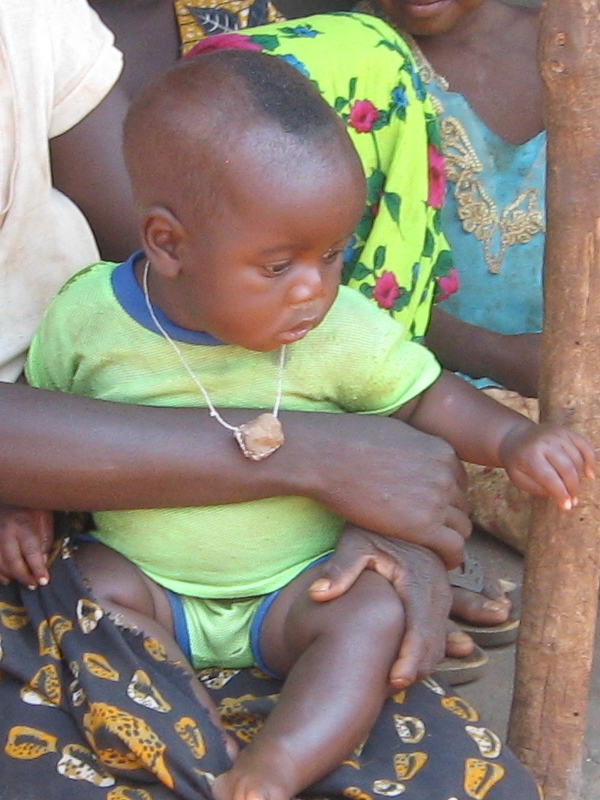
Just last week I saw a child wearing a chisomo, a charm made by a sing’anga to protect the child from curses. There is a lot of variation in how local people view these traditional medicines and charms that are provided by a sing’anga. Some see it as good, others are neutral, and some think that going to a sing’anga is evil or at least shows backwardness.
But for everybody, Gule Wamkulu or not, the dancer Mfiti Ilauala is evil. This dancer, according to a description in the art showroom at KuNgoni Cultural Centre, attends funerals to “carry the spirits of our departed to the world of the Ancestors and transform them into our protectors and mediators.” But it seems strange to me to actually invite an mfiti to transform a dead person into someone who will protect us, when everybody believes that they are evil!




 The Stockers' Stories
15 October 2023 at 9:36 AM
Mfiti is a wizard or witch while Nsing’anga means witch doctor